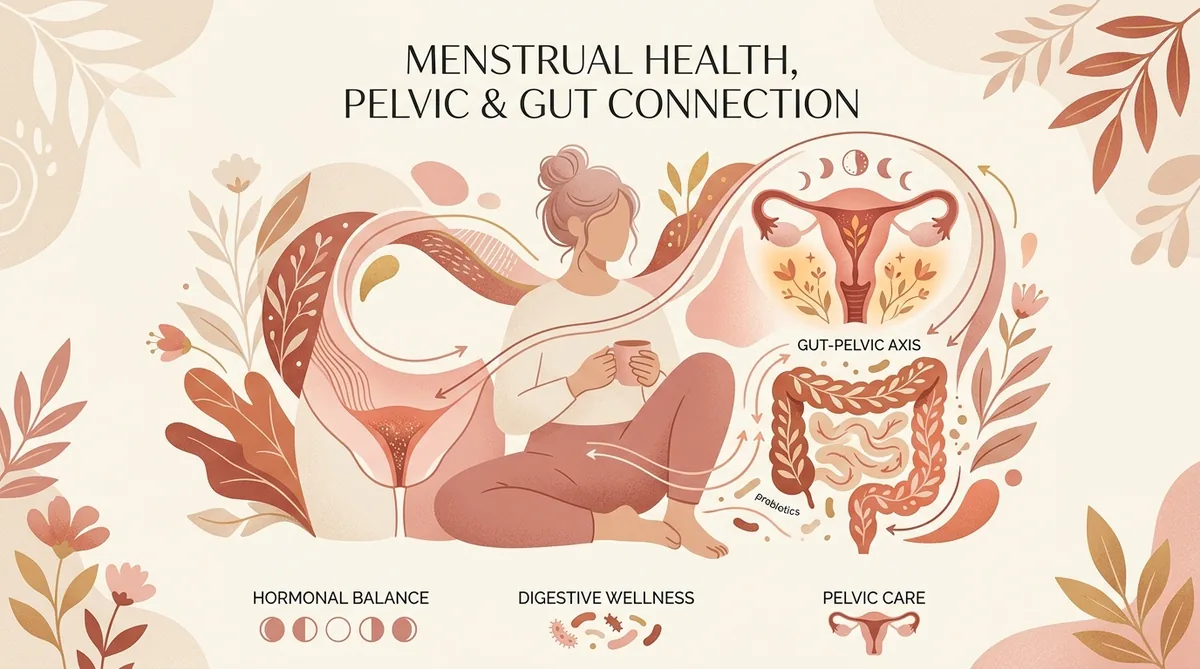
Period poop is real, common, and not in your head. In the day before your period and the first few days of bleeding, many people get looser, more frequent, or more urgent stools. The cause is a group of hormone-like chemicals called prostaglandins. They make your uterus contract, and they also reach the bowel next door and speed it up. This guide gives you the science, a day-by-day timeline, fixes that work, and the signs that need a doctor.
Why Period Poop Happens
Your uterus and bowel sit side by side in the pelvis. Both are wrapped in smooth muscle tissue, and both respond directly to the same chemical messengers circulating through your bloodstream.
Prostaglandins: the main cause
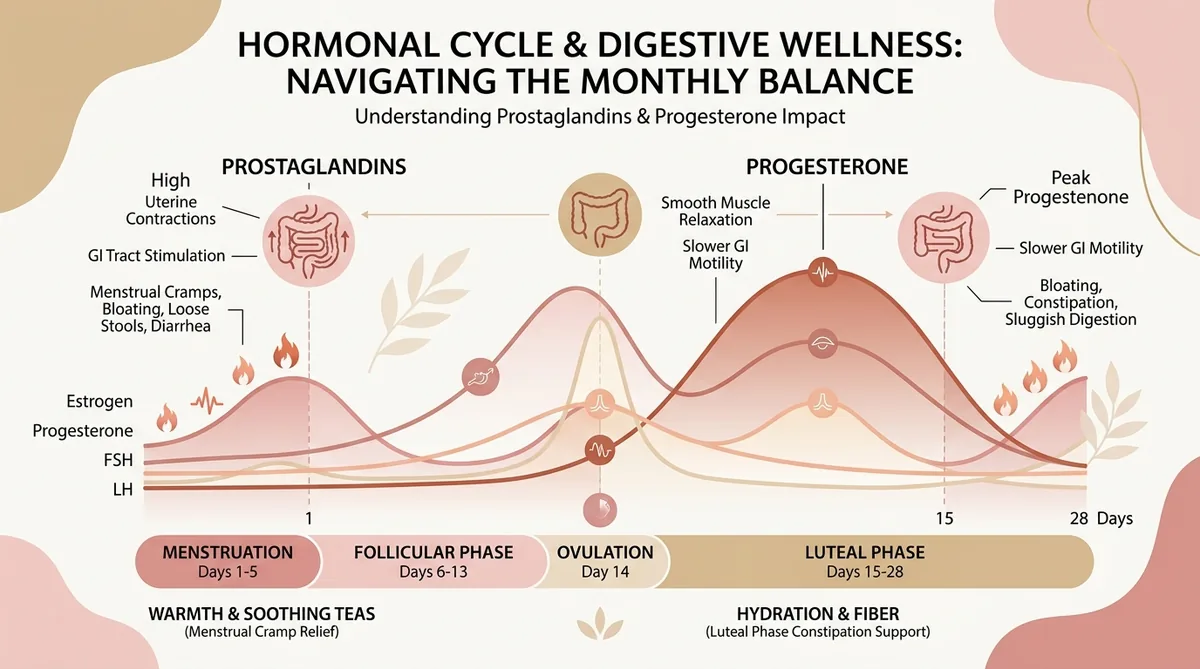
Prostaglandins are lipid compounds that your uterine lining releases as bleeding begins. They stimulate the uterine muscle to contract so it can shed its functional layer. The American College of Obstetricians and Gynecologists (ACOG) links elevated prostaglandin concentrations directly to more intense menstrual cramps.
Because of anatomical proximity, excess prostaglandins diffuse directly into the intestinal tract. According to the Cleveland Clinic, these chemicals induce identical contractions in bowel smooth muscle, causing hypermotility (accelerated movement). Faster transit allows the colon significantly less time to absorb water from digested matter, causing stools to emerge loose, soft, or watery. Tracking these transitions across your cycle can be visualized using our Period Cycle Phases Calculator.
Progesterone: the brake that lets go
During the second half of your cycle, progesterone rises following ovulation. Progesterone serves as a natural smooth-muscle relaxant, slowing gastrointestinal transit. Cleveland Clinic physician Dr. Donald Ford notes that elevated progesterone commonly triggers mild constipation and bloating around or shortly after ovulation.
Right before menstruation starts, if pregnancy has not occurred, the corpus luteum breaks down and progesterone levels crash abruptly. That sudden drop removes the digestive "brake" at the exact moment prostaglandins hit the gas pedal.
Estrogen: a smaller, less clear role
Estrogen levels also fluctuate across the follicular and luteal phases. Clinical literature summarized by Flo Health suggests estrogen shifts can modulate electrolyte and water absorption in mucosal lining. While researchers view this as an auxiliary factor rather than the primary cause, its interaction with gastrointestinal receptors explains why cycle tracking via our Follicular Phase Calculator provides deeper bodily awareness.
Why some people get constipated instead
Not every person experiences diarrhea. Individual sensitivity to progesterone varies significantly. If your baseline digestive tract is prone to sluggish transit, or if conditions like Irritable Bowel Syndrome (IBS) are present, high progesterone can produce severe constipation and abdominal bloating that lingers into day 1 of bleeding before clearing.
Period Poop Timeline: Day by Day
While every body operates on its unique hormonal schedule, clinical endocrinology identifies a consistent progression for typical 28-day cycles:
| When in Cycle | Hormonal Driver | What You May Notice |
|---|---|---|
| 5–7 days before | Progesterone peaks | Abdominal bloating, slower gut motility, mild constipation, firm stools. |
| 1–2 days before | Progesterone plunges, prostaglandins rise | Stools soften noticeably; early morning urgency, gas, and mild uterine cramping. |
| Days 1–2 of bleeding | Prostaglandins peak | Frequent, loose or urgent bowel movements; concurrent menstrual cramps and nausea. |
| Day 3 | Prostaglandin levels decline | Digestive urgency eases, stool consistency firms up, gut motility stabilizes. |
| Day 4 onward | Estrogen begins steady follicular rise | Normal baseline bowel frequency returns; pelvic cramping subsides. |
Gynecologists emphasize that loose stools confined to the 24 hours preceding bleeding and the first 48–72 hours of your period are physiologically normal. If severe diarrhea continues past cycle day 4, it warrants discussion with your physician.
Constipated Before Your Period, Loose During It
Many people experience whiplash swinging between two polar opposites across a single fortnight. The table below details why these two phases hand off to each other:
| Factor | Before Your Period (Late Luteal) | During Your Period (Early Flow) |
|---|---|---|
| Primary Driver | High Progesterone | Surging Prostaglandins |
| Intestinal Speed | Substantially slower | Significantly faster |
| Stool Consistency | Hard, dry, difficult to pass | Soft, loose, watery, urgent |
| Associated Symptoms | Abdominal bloating, water retention, gas | Menstrual cramps, nausea, localized rectal pressure |
| Effective Relief | Soluble fiber, osmotic softeners, high water intake | Electrolytes, anti-inflammatory pain relief, trigger food cuts |
If you experience constipation followed by sudden looseness, you are witnessing two natural hormonal phases executing their handoff. Understanding your exact cycle days with our Period Calculator lets you anticipate these shifts before they strike.
Why Does Your Poop Smell Worse on Your Period?
Noticing a distinct, pungent odor during menstrual bowel movements is widely reported. The primary cause stems from pre-menstrual dietary adjustments:
- Progesterone food cravings: In the days prior to menstruation, appetite surges toward calorie-dense, fatty, and high-sugar comfort foods. Cleveland Clinic notes that changes in macronutrient balance alter gut flora fermentation, releasing sulfuric compounds.
- Accelerated bowel transit: When prostaglandins rush contents through the large intestine, the gut microbiota has less time to break down bile acids and food components gradually, yielding a sharper, sulfurous smell.
Hormones themselves do not carry an odor; it is their impact on digestion speed and appetite that produces the difference.
Why It Can Hurt to Poop on Your Period
Discomfort or pain during menstrual defecation is common, but it is important to distinguish mild muscle tension from pathological pelvic conditions:
- Simultaneous muscle contraction: Bearing down to pass stool while the uterine wall is undergoing active prostaglandin-driven spasms multiplies perceived pain.
- Pelvic floor hypertonicity: When cramping is intense, the pelvic floor muscles guarding the rectum clench instinctively, making evacuation difficult.
- Cutaneous skin irritation: Multiple loose bowel movements combined with menstrual pad friction can cause local external soreness.
However, intense rectal pain during bowel movements that recurs every cycle—termed dyschezia—is a primary clinical hallmark of endometriosis. See the medical criteria section below.
What Helps: 6 Steps to Ease Period Poop
While you cannot eliminate biological prostaglandin production entirely, you can substantially dampen its physical impact with six evidence-backed interventions:
- Consider an NSAID (Ibuprofen or Naproxen) at the earliest sign. Nonsteroidal anti-inflammatory drugs inhibit the COX enzymes responsible for prostaglandin synthesis. Cleveland Clinic clinical guidance highlights that taking ibuprofen with food 24 hours prior to flow dramatically blunts both uterine dysmenorrhea and bowel hypermotility. (Consult your doctor first if you have a history of gastritis, ulcers, kidney issues, or IBD.)
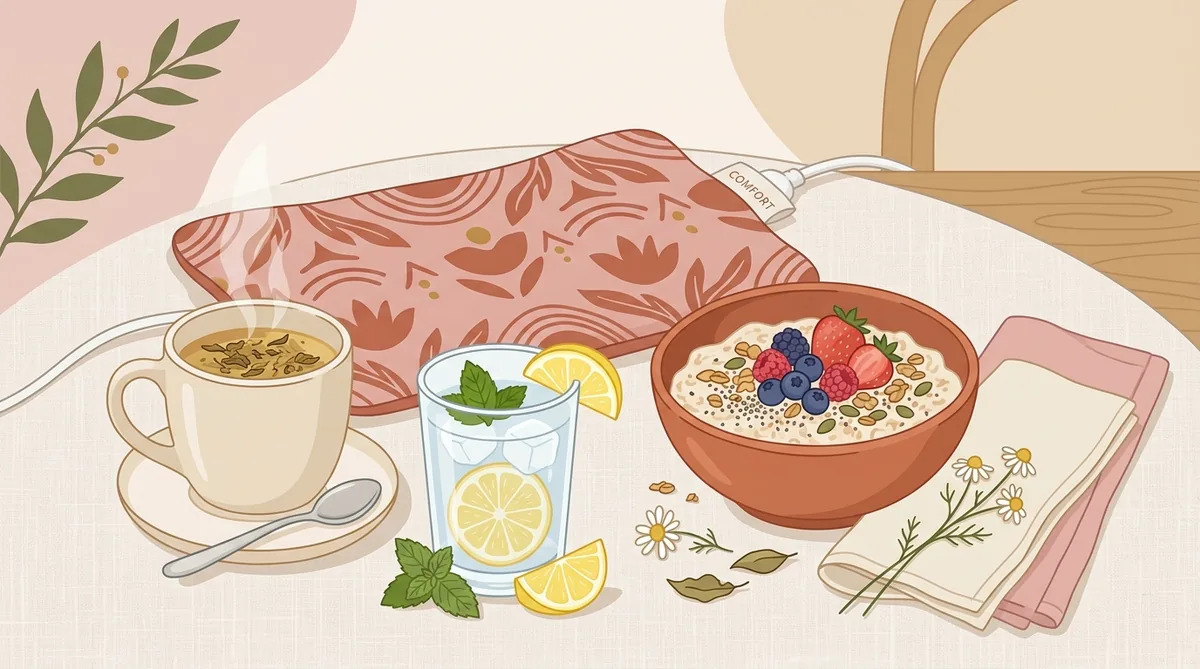
- Increase water and electrolyte intake. Frequent loose stools rapidly deplete hydration and essential minerals. Drink warm water, broths, and electrolyte-rich beverages consistently throughout days 1–3.
- Temporarily reduce caffeine and fried foods. Coffee stimulates colonic motor activity independently through gastrin release. Combining caffeine with prostaglandins triggers severe urgency. Scale back to herbal teas on flow days.
- Maintain consistent fiber all month long. Rather than overloading on fiber only when constipated, keep soluble fiber (oats, flaxseeds, chia, cooked apples) steady across all 4 cycle phases. This stabilizes stool consistency in both directions.
- Support the pre-period constipation phase early. If your luteal phase brings painful constipation, ask a pharmacist about gentle osmotic agents like polyethylene glycol (MiraLAX) or magnesium citrate 3–4 days before bleeding.
- Apply topical heat and practice gentle movement. A heating pad placed on the lower abdomen or lower back relaxes smooth muscle tension across both the uterus and pelvic floor. Short walks encourage normal peristalsis without spasm.
A practical preparation example
Suppose your menstrual cycle averages 28 days and your bowel slows down around cycle day 23. You can set a reminder with our PMS Calculator: begin increasing water and soluble fiber on day 22. Have ibuprofen on hand for day 1. Swap morning espresso for warm peppermint tea on days 1–2, and plan a bathroom-friendly routine during your heaviest flow hours.
Does hormonal birth control change period poop?
Combined oral contraceptives, hormonal IUDs, and implants suppress ovulation and significantly thin the endometrial lining. With less endometrial tissue to shed, prostaglandin production decreases markedly. Consequently, many individuals note lighter periods, milder cramps, and a marked reduction in menstrual bowel symptoms. If bowel symptoms are debilitating, ACOG notes that continuous-dose contraception can be discussed with your physician.
When to See a Doctor
Mild, predictable bowel variations that resolve by cycle day 3 or 4 are standard physiology. The symptoms below, however, require medical consultation:
| Usually Normal (Physiological) | See a Doctor (Requires Clinical Review) |
|---|---|
| Looser stools during days 1–3 of bleeding | Visible red blood in stool or black, tarry bowel movements |
| Mild constipation during the 5 days before your period | Watery diarrhea lasting more than 48 hours past period cessation |
| Mild crampy urgency synchronized with menstrual flow | Severe, stabbing rectal pain during defecation (dyschezia) |
| Slightly smellier stool caused by dietary comfort cravings | Unexplained weight loss, high fever, or repeated vomiting |
| Temporary bloating relieved once period begins | Debilitating pelvic pain that prevents normal work or daily activity |
Critical Clinical Conditions
Endometriosis: When endometrial-like tissue implants on the bowel wall, rectovaginal septum, or pouch of Douglas, it bleeds and swells every month in response to hormones. This causes intense pain during bowel movements, painful intercourse, and chronic pelvic pain. The NHS emphasizes that chronic menstrual bowel pain is a primary indicator that should never be dismissed as "just a rough period."
Bowel pathology: Persistent rectal bleeding, unexplained changes in stool caliber, or altered bowel habits lasting longer than 3 weeks must always be investigated by a physician to rule out colorectal pathology.
Inflammatory Bowel Disease (IBD) & IBS: Cleveland Clinic clinical studies confirm that patients with Crohn's disease, ulcerative colitis, or IBS often experience flare-ups during menstruation due to prostaglandin receptor cross-reactivity.
What We Can't Tell You
There is no at-home blood test that measures exact prostaglandin surges in personal bowel tissue. Medical studies on menstrual gastrointestinal changes are often small, and hormonal sensitivity varies widely across genetics, diet, and anatomy. This article is educational and cannot replace individualized diagnostic care from an OB/GYN or gastroenterologist.
Frequently Asked Questions
Clinical answers to common questions about menstrual bowel changes.
Why do I poop more on my period?
Prostaglandins are the main reason. Your uterine lining releases these fat-based chemicals to contract and shed its lining. Prostaglandins diffuse into the neighboring bowel and stimulate contractions, accelerating digestion so stool moves faster and absorbs less water.
Is period diarrhea normal?
Yes, on days 1–3 it is very common. As prostaglandin levels fall, bowel habits typically settle back to normal. However, you should see a doctor if diarrhea is severe, persists past your period, or contains blood.
Why am I constipated before my period?
Progesterone rises substantially after ovulation during your luteal phase and acts as a digestive relaxant, slowing gut transit. Bloating, water retention, and hard, infrequent stools are frequent in the 5–7 days before menstruation starts.
How long does period poop last?
Most people notice changes starting 1 to 2 days before bleeding begins through cycle days 2 or 3. If digestive changes persist well past day 4 or 5, you should discuss them with your healthcare provider.
Why does my poop smell worse on my period?
Dietary cravings are the leading driver. Pre-menstrual cravings for refined carbohydrates, sugars, and high-fat comfort foods change the gut biome. Faster intestinal transit time also alters how stool breaks down and smells.
Can I stop period poop completely?
Not completely, because prostaglandins and progesterone are natural hormonal drivers. However, you can significantly diminish discomfort by taking an NSAID like ibuprofen right as symptoms start, hydrating adequately, eating steady fiber, and avoiding excessive caffeine and fried foods.
Is a painful bowel movement on my period a sign of endometriosis?
It can be. Painful bowel movements during menstruation (dyschezia), especially when accompanied by debilitating pelvic pain, heavy periods, or deep pain during intercourse, is a hallmark sign of endometriosis. Have this evaluated by an OB/GYN.
Who can confirm if my symptoms are normal?
A board-certified gynecologist, GP, or gastroenterologist can evaluate your individual symptoms. Guidelines from ACOG, the NHS, and Cleveland Clinic provide population baselines, but only a personal physician can diagnose underlying issues.
Medical & Scientific Sources
- American College of Obstetricians and Gynecologists (ACOG): Clinical Guidance on Dysmenorrhea and Prostaglandin Activity in Menstrual Health. acog.org
- Cleveland Clinic Health Essentials: Why Do You Poop More on Your Period? Donald Ford, MD. health.clevelandclinic.org
- National Health Service (NHS UK): Endometriosis Symptoms, Diagnosis & Management. nhs.uk
- Flo Health Clinical Review: Period Poop: Why It Happens and How to Treat It. flo.health