Period Calculator — Predict Your Next Period, Ovulation & Fertile Window (2026)
Stop guessing when your next period will arrive. Track your cycle, ovulation, and fertile days easily with our accurate period calculator.
Calculated on your device. Nothing is saved.
Other free calculators
Ovulation Calculator
Calculate your estimated ovulation date, 6-day fertile window, and peak conception days. 100% private, client-side calculator with zero tracking.

Fertility Calculator
Plan conception with your personalised fertile window, peak fertility days, recommended intercourse timing, and LH test dates. 100% private.

Period Cycle Phases Calculator
Find today's menstrual phase, cycle day, and days remaining in each phase with an interactive 4-phase biological cycle ring. Fast and private.
Period Calculator for Irregular Periods
Predict your next period range and fertile window using your shortest and longest cycle lengths. Designed for irregular cycles and PCOS.
Safe Days Calculator
Identify lower and higher conception probability days using the Ogino-Knaus calendar rule. Educational fertility awareness with zero data saved.

Due Date Calculator
Calculate your estimated baby due date, current gestational age, trimester, and weekly milestones from your LMP, conception, or ultrasound date.

Conception Calculator
Estimate your probable conception dates and fertile window from your last period, ultrasound, or due date. Pure client-side calculations.
Implantation Calculator
Calculate your estimated implantation window, earliest pregnancy test date, and clinical milestones based on ovulation or conception timing.
Follicular Phase Calculator
Calculate the estimated start and end dates of your follicular phase, total phase length, and key hormonal changes. Private, client-side tool.
What is Period Calculator?
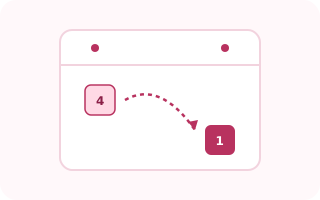
A period calculator estimates your next period date, fertile window, and ovulation day based on two inputs: the first day of your last period and your average cycle length. The calculation uses the standard model documented by the American College of Obstetricians and Gynecologists (ACOG) — cycle length minus 14 days to estimate ovulation, with the fertile window spanning five days before ovulation through one day after.
This tool runs entirely in your browser. No data is stored, no account is required, and nothing is transmitted off your device.
It works for both regular and irregular cycles. If your cycle varies between 25 and 40 days due to stress, illness, or hormonal shifts, the calculator adjusts predictions accordingly — something most standard apps don’t do without a paid subscription.
What is the Menstrual Cycle?
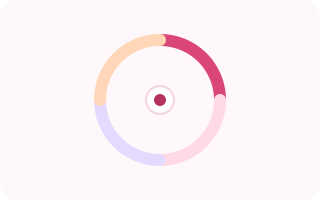
The menstrual cycle is the natural monthly process that prepares the body for a possible pregnancy. It begins on the first day of your period and ends the day before the next period starts. Understanding this cycle helps you estimate when your next period, ovulation, and fertile window may occur.
Cycle length varies from person to person. Many cycles fall between 21 and 35 days, According to the NHS, a typical menstrual cycle lasts between 21 and 35 days, though variations are common and do not always indicate a problem. Stress, travel, illness, or lifestyle changes can sometimes shift the timing. Because of this variation, tools like a period calculator and tracker help estimate cycle events based on your recent period dates.
Follicular Phase
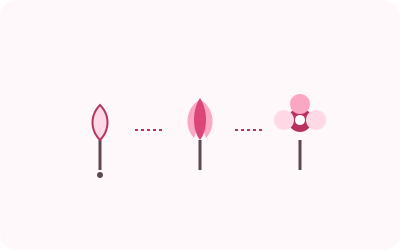
This phase begins on the first day of menstruation and continues until ovulation. During this time, the body prepares for the release of an egg while the uterine lining begins to rebuild after the previous period.
Ovulation Phase
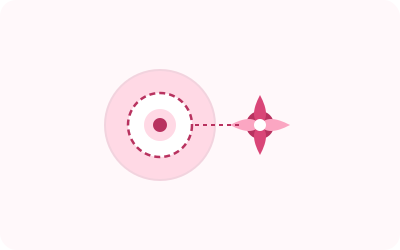
Ovulation usually occurs near the middle of the cycle. An egg is released from the ovary and remains available for fertilization for a short period of time. The days surrounding ovulation are often considered the fertile window, which is why many people track this phase closely.

Luteal Phase
The luteal phase begins after ovulation and lasts until the next period starts. If pregnancy does not occur, the uterine lining sheds and a new menstrual cycle begins.
How to Calculate Your Next Period?
Calculating your next period can be simple once you understand your cycle length and recent periods. The menstrual cycle starts on the first day of your period and ends the day before your next one begins. For most women, a cycle lasts between 21 and 35 days, but it can vary from month to month.
To predict your next period:
Step 1: Identify the first day of your last period. This is considered day 1 of your cycle.
Step 2: Determine your average cycle length. Count the days from the first day of one period to the day before the next period over several cycles, then calculate the average.
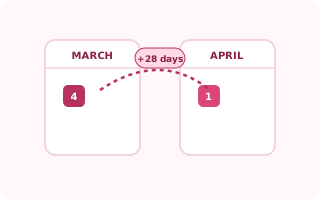
Step 3: Add your average cycle length to the first day of your last period. The result is the estimated start date of your next period.
For example, if your last period started on March 4 and your cycle is 28 days, your next period is likely to begin around April 1.
Tracking Irregular Cycles
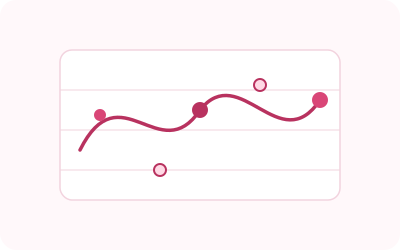
If your cycle varies, the calculation may shift. Many women experience cycles ranging from 25 to 40 days due to stress or hormonal changes. In these cases, a period predictor can adjust predictions based on multiple months of tracking, helping you notice patterns and prepare for upcoming periods.
Using this method, you can confidently estimate your next period and recognize when your cycle is shifting, helping you manage symptoms, track fertility, or spot irregularities that might need medical attention.
How Our Period Calculator Stands Out
Not all next period calculators are created equal. While many apps require sign-ups, store your data, or assume a perfectly regular cycle, our tool takes a different approach.

Privacy-First and Browser-Based
Our calculator runs entirely in your browser, meaning none of your data is stored or shared. You don’t need to create an account, download an app, or enter personal details beyond your last period and cycle length. Everything stays private and local on your device.

Accuracy for Irregular Cycles
Standard calculators assume a textbook 28-day cycle. This one doesn’t. If your cycle fluctuates between 25 and 40 days — common with PCOS, perimenopause, thyroid conditions, or high stress — enter your actual average and the predictions shift accordingly. The more accurately you know your typical range, the closer the estimates will be.

Real-World Examples Built In
The calculator is designed with actual user experiences in mind. For instance, if someone’s cycles fluctuate due to stress, travel, or hormonal changes, the tool still provides reliable estimates, helping users plan ahead and stay informed.
What This Calculator Cannot Do
This tool cannot confirm ovulation — it estimates it based on average luteal phase length. It cannot account for anovulatory cycles, where ovulation doesn’t occur. It should not be used as a contraceptive method. For fertility treatment or pregnancy planning, consult a gynaecologist or use a certified ovulation test.

Understanding Your Calculator Results
After entering your last period date and average cycle length, the calculator provides estimated dates for your next period, ovulation, and fertile window. These results are meant to guide you, not replace professional medical advice.
- Next Period Dates: The calculator predicts the start and end dates based on your average cycle. For example, if your last period began on March 4 and your cycle is 28 days, the next period is estimated around April 1.
- Fertile Window: This is typically 5 days before ovulation through 1–2 days after ovulation. Tracking these days can be helpful if you are trying to conceive or understand your fertility patterns.
- Ovulation Day: For a 28-day cycle, ovulation usually occurs around day 14. If your cycle is irregular, the calculator adjusts the estimate based on historical data from multiple cycles.
Accuracy Considerations:
- Cycle length can vary month to month due to stress, lifestyle changes, illness, or hormonal fluctuations.
- Irregular cycles can shift predictions by a few days. Logging multiple months improves accuracy and helps you spot patterns.
- Our calculator does not guarantee exact dates and should not be used as a contraceptive method.
Why Tracking Matters: Regularly checking your cycle and noting symptoms like cramps, mood changes, or breast tenderness can make predictions more precise. This data-driven insight allows you to anticipate physical and emotional changes and plan daily activities accordingly.
How the Period Tracker Helps with Irregular Cycles
Even if your cycle isn’t perfectly regular, this calculator can help. By tracking your past period dates over several months, it estimates your next period, fertile window, and ovulation days based on your personal patterns. The more you log, the more accurate the predictions become — giving you useful insights even when your cycle varies from month to month.

FAQs
How do I calculate my next period?
To calculate your next period, enter the first day of your last menstrual period and your average cycle length into a period calculator. The tool estimates your next period by adding your cycle length to the start date of your last period. For irregular cycles, tracking multiple months improves accuracy.
How do I calculate my cycle length?
Count the number of days from the first day of one period to the day before the next. Repeat over several cycles and calculate the average. This gives your menstrual cycle length, which you can use to predict future periods or fertile windows.
Can I track ovulation with irregular periods?
Yes. Ovulation tracking for irregular cycles is possible using a calculator that adapts to your past cycles. Signs like cervical mucus, basal body temperature, and luteinizing hormone (LH) surges can help refine predictions.
When is the best time to get pregnant after my period?
The fertile window usually falls 5 days before ovulation up to 1–2 days after. For a 28-day cycle, ovulation occurs around day 14. Using a period and ovulation calculator helps estimate this window even if your cycles are irregular.
How do I calculate due date from last menstrual period?
Pregnancy due dates are typically estimated by adding 280 days (40 weeks) to the first day of your last menstrual period. Many period calculators provide this feature for accurate pregnancy tracking.
How can I tell if my period is late?
Your period is technically late if it occurs more than 7–8 days after the expected date. Causes include pregnancy, stress, weight changes, medical conditions like PCOS, or hormonal fluctuations. Tracking your cycles helps identify patterns and detect unusual delays.
What is the average menstrual cycle?
The average menstrual cycle lasts 28 days, with normal ranges between 21 and 35 days.
Can stress or lifestyle changes affect my period?
Yes. Stress, diet, exercise, and sleep can all influence hormone levels and menstrual timing. Tracking these alongside your period data improves the accuracy of predictions.

Final Words
Understanding your menstrual cycle helps you plan ahead and manage symptoms. Our browser-based period calculator and tracker keeps your data private, requires no account, and adapts to irregular cycles to estimate your next period, ovulation, and fertile days more accurately.
It also includes helpful features like a visual calendar, cycle summaries, and optional reminders, making it easier to track your cycle and understand your body better.